People often throw around the term “internet speed” without understanding what it really means. What most are actually talking about is a combination of bandwidth, throughput, and latency — three separate things that shape how smooth your digital life feels, whether you’re streaming a film, making a video call, or uploading files to the cloud.
Let’s break down what these terms mean, why they’re often misunderstood, and how they affect you — especially as everything around us becomes more connected.
What Is Bandwidth, Really?
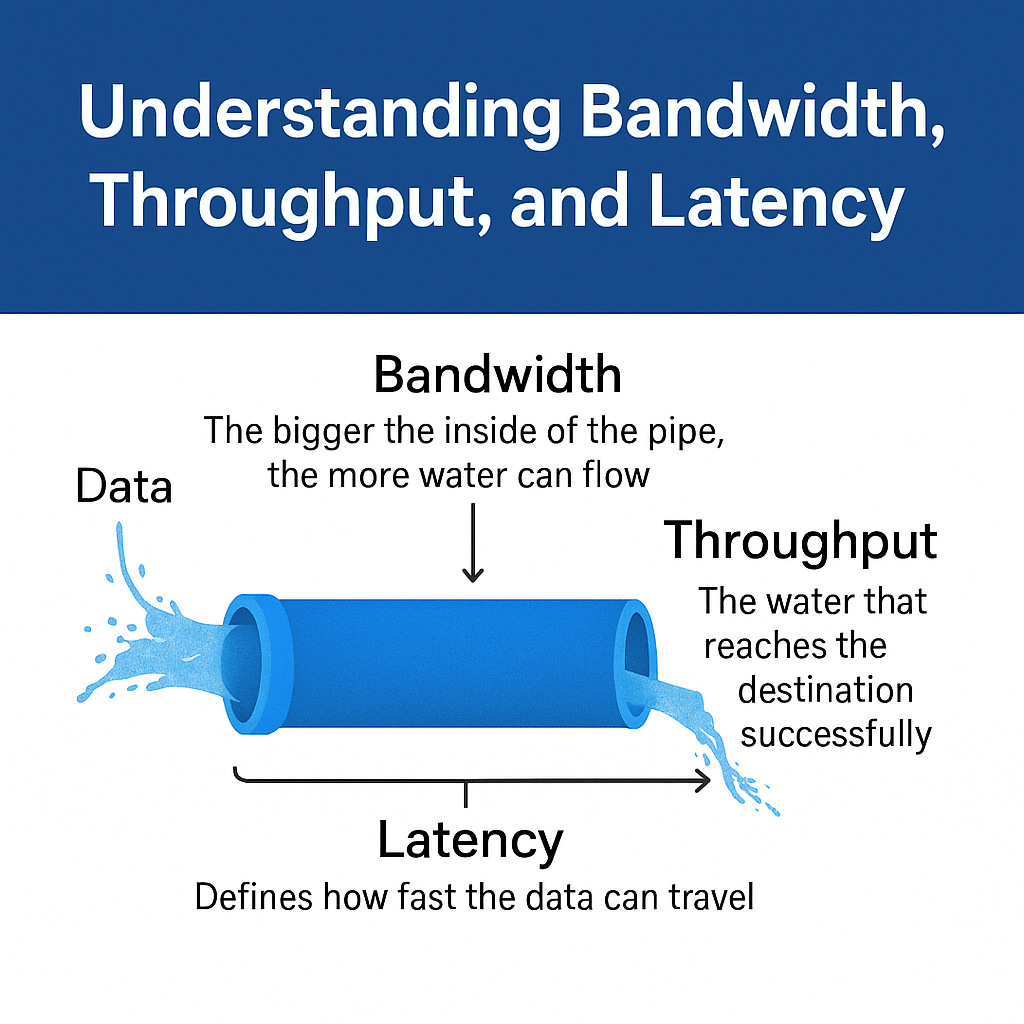
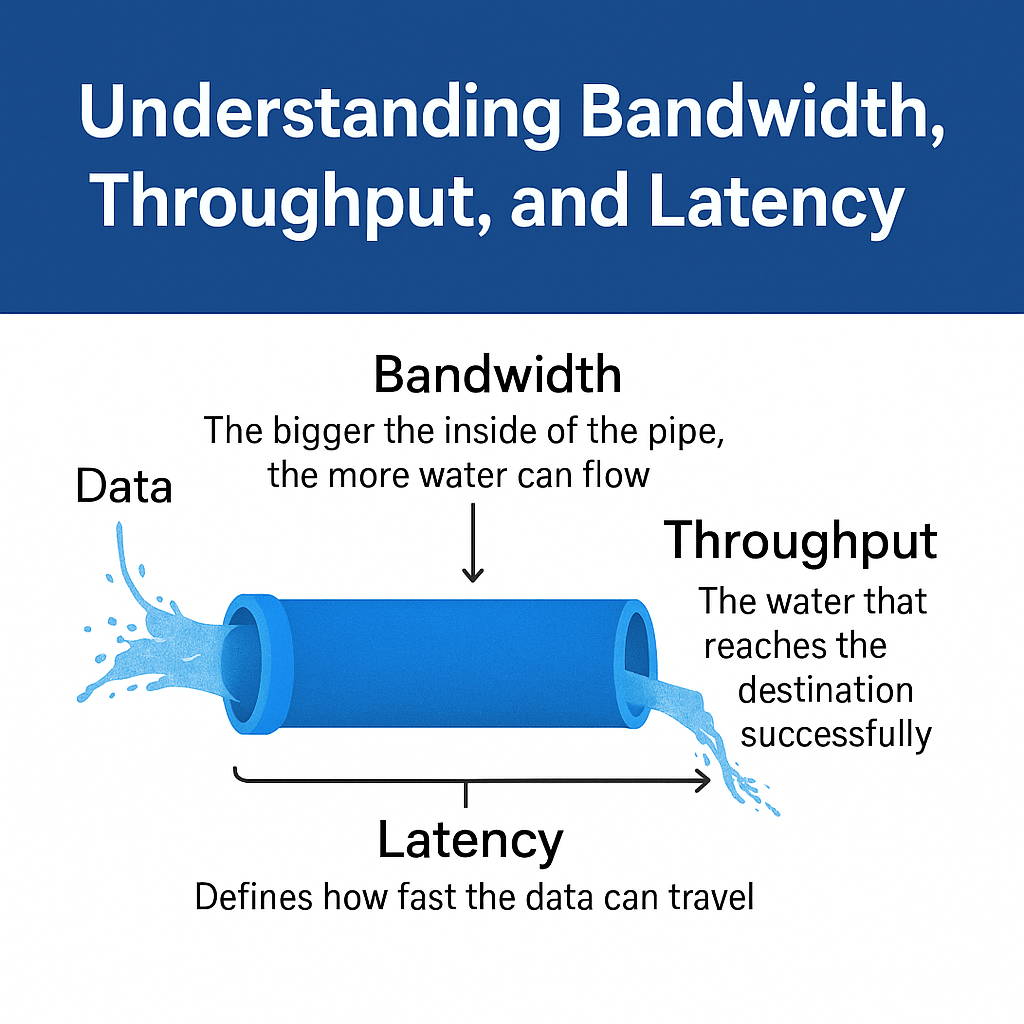
Imagine a water pipe. The diameter of that pipe determines how much water can flow through it at once. That’s your bandwidth — the maximum capacity of a connection, measured in Mbps or Gbps.
It’s what your internet provider advertises when they say you’re getting “up to 500 Mbps.” But that’s just potential. It doesn’t guarantee how fast your connection will feel or perform when it matters.
Throughput: The Real-World Speed
Now picture that same pipe with water actually running through it. Throughput is the amount of water that makes it from one end to the other — the actual data successfully transferred, not just the theoretical limit.
You might be paying for a 1000 Mbps (1 Gbps) connection, but if your setup includes a 100 Mbps switch, that’s all you’re going to get. You’ve limited your own speed without even realizing it.
Throughput depends on a lot of things — from the quality of your hardware to what else is happening on the network at the same time.
Latency: The Invisible Delay
This one’s about timing. Latency is how long it takes for data to go from point A to point B. Even with a huge pipe (high bandwidth) and no blockages (good throughput), if the water takes forever to arrive, it’s still frustrating.
In digital terms, high latency shows up as lag in games, delays in calls, or that awkward moment where someone on a Zoom call talks over someone else. It’s measured in milliseconds, but those milliseconds count.
An Example You’ve Probably Seen
You might have a fast internet plan at home, say 1 Gbps. But if you’re connecting through older networking gear, like a 100 Mbps switch or Wi-Fi router from a few years ago, that bandwidth means nothing. You’ve got a wide pipe, but a narrow tap at the end. Only a trickle gets through.
That’s where throughput becomes the star — not what’s advertised, but what you actually experience.
Why This Matters Now More Than Ever
We’re not in the dial-up era anymore. Life today is digital at its core:
Offices are in the cloud. Files, meetings, and apps — everything happens online. Phones aren’t phones anymore. Landlines using ISDN are disappearing, replaced by VoIP, which needs stable connections to keep calls clear. TVs stream everything. 4K and even 8K streaming is becoming standard. Services like Netflix can easily require 20–30 Mbps per stream. Add in kids on YouTube and someone working remotely, and your connection gets stretched thin. Smart homes are always on. Doorbells, thermostats, security cams — they all want a slice of your connection.
Throughput becomes the key. It’s not about how big your connection is on paper. It’s about how efficiently your network can deliver — even under pressure.
What You Can Do
If you want your internet to live up to its promise, think beyond bandwidth:
Upgrade your hardware. That includes switches, routers, and even cables. If anything is capped at 100 Mbps, you’re already limited. Check your setup. Wi-Fi coverage, interference, and overloaded routers can all choke your throughput. Run speed tests regularly. Don’t just test for download speed — look at ping (latency) and upload too. Prioritize traffic. Many modern routers let you prioritize devices or services, so your video call doesn’t drop when someone else starts a big download.
Final Thoughts
It’s easy to get caught up in advertised speeds. But in practice, how your connection performs is about more than just raw numbers. Throughput is what truly reflects your online experience, and as our homes and businesses become more connected, understanding how to manage and optimize it will only get more important.
Don’t just pay for fast internet — make sure you can actually use it.


Leave a Reply